

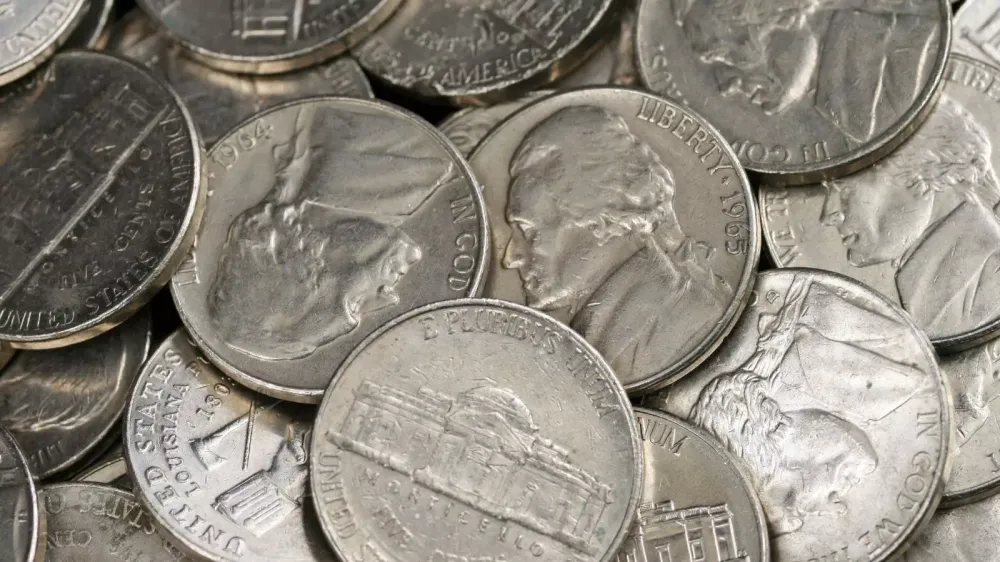
Most Valuable Nickels Worth Money (Key Dates & List)
Key Dates, Rare Series & Real Values — Updated 2026
THE SHORT ANSWER: The 1913 Liberty Head Nickel, the 1937-D Three-Legged Buffalo, and the 1942–1945 War Nickels are the three categories that belong on every serious collector's radar. But the list doesn't stop there — and some of the most undervalued coins on this page are sitting in coin rolls right now, waiting for someone who knows what to look for.
Most people think of a nickel as five cents and nothing more. That's the gap that separates casual coin holders from collectors who know that the same five-cent piece — depending on year, mint mark, and what went wrong at the press — can be worth anywhere from a dollar to $4.5 million. I've spent significant time going through real auction records, grading data, and the actual key date lists that matter. What follows is the honest breakdown: which nickels are worth money, why, and how to tell if you have one.
The U.S. nickel has a more complicated history than most people realize. Four completely different series span nearly 160 years — Shield, Liberty Head, Buffalo, and Jefferson — and each one has its own key dates, error varieties, and condition traps. Understanding the full picture is what turns a jar of old change into an informed search.
What Makes a Nickel Worth Money?
Before diving into the list of nickels worth money by series and year, it helps to understand what separates a face-value five-cent piece from one that commands thousands at auction. There are really only four things that matter:
- Key dates and low mintage — Some years, the Mint produced far fewer nickels. Fewer struck means fewer surviving today. The 1950-D Jefferson Nickel had a mintage of just 2.6 million — a tiny number by modern standards — and that scarcity is baked into its value permanently.
- Minting errors — Doubled dies, overdates, repunched mint marks, wrong metal compositions, and missing design elements. The 1937-D Three-Legged Buffalo is the most famous example: a die-polishing accident removed one of the buffalo's legs entirely, creating one of the most recognizable and valuable error coins in American numismatics.
- Condition — PCGS and NGC grade coins on the Sheldon Scale from Poor (P-1) to Perfect Mint State (MS-70). For nickels, condition matters more than almost any other series because Buffalo Nickels wear quickly and Jefferson Nickels require a specific designation — 'Full Steps' — to command serious premiums.
- Strike quality and 'Full Steps' — This is the nickel-specific factor that catches most collectors off guard. On Jefferson Nickels, the steps leading up to Monticello on the reverse must be fully struck and unbroken to earn the 'Full Steps' (FS) designation. A coin graded MS65 Full Steps can be worth three to five times more than an MS65 without it. Most apps don't catch this. Most collectors miss it.
Silver content is a fifth factor specific to one era: the 1942–1945 War Nickels contain 35% silver and are worth more than face value for the metal alone, regardless of condition. At current silver prices, each one carries roughly $1.50–$2.00 in melt value, and key dates within the War Nickel series push far higher.
The Four Nickel Series — A Quick Orientation
You can't build a useful nickels worth money list without first understanding that 'nickel' covers four completely distinct coin series, each with its own rarities and its own collecting logic. Here's the honest orientation:
Shield Nickels (1866–1883)
The first five-cent nickel, replacing the silver half dime after the Civil War. The design featured a shield on the obverse and the numeral '5' surrounded by stars on the reverse. These are old coins, and most of the valuable dates are low-mintage issues or proof specimens. The 1880 Shield Nickel is the rarest circulation strike in the series — only 16,000 were produced, and PCGS has certified fewer than 30 Mint State examples. One MS66 specimen sold for $198,995 in January 2023. The 1867 with Rays, the 1879, and the 1883/2 overdate are the other dates that serious collectors pursue in this series.
Liberty Head Nickels (1883–1913)
Charles Barber's design replaced the Shield Nickel in 1883, initially without the word 'CENTS' on the reverse — an omission that led to a brief fraud where the coins were gold-plated and passed as $5 gold pieces. That was corrected within the year. The Liberty Head series ran smoothly until its official end in 1912, producing one of the most legendary coins in American numismatic history: the 1913 Liberty Head Nickel.
Five 1913 Liberty Head Nickels are known to exist. Official production ended in 1912, but five specimens were struck illicitly — by whom and under what circumstances remains disputed. Each of the five has been authenticated, named, and tracked through the collector community for over a century. In 2010, one sold for $3.7 million. In 2018, another cleared $4.56 million. These are not coins that show up in estate sales. But knowing they exist — and understanding why they're worth what they are — is the baseline for serious nickel collecting.
Buffalo Nickels (1913–1938)
James Earle Fraser's design is one of the most beloved in American coin history — a Native American portrait on the obverse, an American bison on the reverse. It's also one of the most problematic series for collectors, because Buffalo Nickels wear quickly, dates often disappear entirely on circulated coins, and the design's high relief made consistent strikes difficult. A dateless Buffalo Nickel is worth almost nothing. A sharply struck example in Gem condition with Full Horn details is worth dramatically more than most people expect.
The key dates and errors in the Buffalo series are where the real money is. The 1918/7-D overdate (where a '7' is visible beneath the '8' in the date), the 1926-S, the 1916 Doubled Die Obverse, and above all the 1937-D Three-Legged Buffalo are the coins that define this series. San Francisco and Denver mint marks from the 1920s are consistently more valuable than Philadelphia issues across the board.
Jefferson Nickels (1938–Present)
Felix Schlag won an open competition in 1938 to design the Jefferson Nickel, depicting Thomas Jefferson on the obverse and his home, Monticello, on the reverse. The series has been in continuous production ever since — through World War II composition changes, design modifications in 1966, the Westward Journey commemorative series in 2004–2005, and a new front-facing Jefferson portrait in 2006 that continues today.
Most Jefferson Nickels are common. But the Full Steps designation creates a parallel market within the series that most collectors underestimate. A 1954-S Jefferson Nickel in MS65 without Full Steps might be worth $50. The same coin with Full Steps has sold for over $35,000. That's not a small difference — that's a completely different category of coin. The 1950-D, 1938-D, War Nickels, and various overdate and repunched mint mark varieties round out the key areas to know.
The Rare Nickels List — Key Dates Every Collector Should Know
This isn't an exhaustive catalog of every nickel ever struck. It's the list that actually matters — the coins where the difference between knowing and not knowing is measured in real money.
1913 Liberty Head Nickel
Estimated Value: $3,700,000 – $4,560,000 · Only five known examples in existence
This is the nickel that starts every conversation about rare coins in America, and for good reason. Official production of the Liberty Head design ended in 1912. Five coins dated 1913 exist anyway — struck illicitly, under circumstances that have never been fully explained. All five have been authenticated, all five have individual names in the collector community, and all five have auction histories that read like small fortunes changing hands.
In 2010, the specimen known as the 'Walton Nickel' sold for $3.7 million. In 2018, another example cleared $4.56 million at auction. These are not coins that appear in inherited jars or bank rolls. But they represent the ceiling of the nickel market — and understanding that ceiling changes how you think about every nickel below it.
1918/7-D Buffalo Nickel (Overdate)
Estimated Value: $50,000 – $350,750 · The most dramatic overdate in the Buffalo series
Overdate errors occur when a die originally prepared for one year is repurposed for the next, leaving traces of the original date beneath the new one. The 1918/7-D is the most valuable overdate in the Buffalo Nickel series — the '7' is visible beneath the '8' in the date when examined under magnification. At the Denver Mint in 1918, a leftover die from 1917 was used to produce circulation coins, creating a variety that went largely unnoticed for years.
The highest authenticated auction result for a top-grade example is $350,750. Even in circulated grades, the premium over common 1918-D nickels is significant. Authentication matters here: the 7-over-8 detail must be confirmed by a professional grading service before any serious money changes hands.
1926-S Buffalo Nickel
Estimated Value: $2,000 – $322,000 · The key low-mintage date of the Buffalo series
The 1926-S is what a key date looks like in its purest form: no dramatic error, no unusual circumstances — just a very small number of coins produced at the San Francisco Mint, most of which entered circulation immediately and suffered heavy wear. Finding a 1926-S in anything above Fine condition is genuinely difficult. Finding one in Gem condition is exceptional.
The auction record for this coin — an NGC MS66 example — is $322,000, set in April 2008. Weak strikes are common on this date, which means sharply detailed examples carry extra premiums even beyond the grade. Look for the 'S' mint mark below the buffalo on the reverse, and examine the Native American's hair braids and the buffalo's features for strike quality.
1937-D Three-Legged Buffalo Nickel
Estimated Value: $500 – $99,875 · The most famous mint error in the nickel series
The 1937-D Three-Legged Buffalo is the error coin that collectors quote when someone asks what a minting mistake is worth. A die-polishing accident at the Denver Mint in 1937 removed the front right leg of the buffalo entirely — producing circulation coins where the animal appears to stand on three legs instead of four. The error wasn't discovered until the coins were already in circulation.
The highest authenticated auction price for a top-grade example is $99,875. Even in heavily worn grades where most details have flattened, the missing leg is identifiable and the premium over a regular 1937-D is substantial. The key to authenticating this coin: the missing leg area should appear smooth and flat, not scratched or filed. Altered coins exist — the 1936-D Three-and-a-Half Legs variety, where only partial polishing occurred, is also collectible but less valuable.
1942–1945 War Nickels (Silver Composition)
Estimated Value: $2 – $175,000 · 35% silver, identifiable by large mint mark above Monticello
When the United States entered World War II, nickel became a critical war material. The U.S. Mint responded by changing the five-cent coin's composition to 56% copper, 35% silver, and 9% manganese — producing what collectors call 'War Nickels' from 1942 through 1945. These are the only nickels in the Jefferson series that contain silver, and they're identifiable by a single distinctive feature: a large mint mark (P, D, or S) placed above the dome of Monticello on the reverse. No other nickel series uses this mint mark position.
Common circulated War Nickels are worth roughly $1.50–$2.00 in silver content at current prices. But within the series, certain varieties climb dramatically higher. A 1942 Proof War Nickel — one of the first proof coins struck with the new composition — sold privately for $175,000, establishing the record for this series. The 1945-P Doubled Die Reverse, where the Monticello text and 'FIVE CENTS' appear visibly doubled, has reached $18,800 at auction. The 1943-P 3 Over 2 overdate — where a '2' is visible beneath the '3' in the date — has cleared $16,450.
1950-D Jefferson Nickel
Estimated Value: $20 – $35,000+ (Full Steps) · The key date of the Jefferson series
The 1950-D is the coin that anchors every conversation about Jefferson Nickel key dates. With a mintage of just 2,630,030 — among the lowest in the entire Jefferson series — it was recognized as scarce almost immediately after release. Collectors hoarded rolls, which paradoxically makes high-grade examples more common than you might expect while keeping problem-free circulated examples scarce.
The value gap created by the Full Steps designation is nowhere more apparent than here. A 1950-D in MS65 without Full Steps might bring $20–$50. The same coin with Full Steps has sold for dramatically more. The 1950-D is the coin that teaches most Jefferson Nickel collectors what Full Steps actually means — because finding one that qualifies is genuinely difficult.
1954-S Jefferson Nickel (Full Steps)
Estimated Value: $50 – $35,250 · The highest-value Jefferson Nickel in the modern market
The 1954-S is the top of the Jefferson Nickel mountain in terms of current market value, and its position there is almost entirely a function of the Full Steps designation. The coin itself had a reasonable mintage — it's not scarce by Buffalo Nickel standards — but finding a 1954-S with fully struck, unbroken Monticello steps is extraordinarily difficult. The population of PCGS and NGC certified Full Steps examples is genuinely tiny.
A 1954-S with Full Steps designation in top grades has reached $35,250 at auction. Without Full Steps, the same coin in the same grade is worth a fraction of that. This is the coin that most clearly demonstrates why Full Steps matters — and why any serious Jefferson Nickel collection has to grapple with strike quality as a primary value driver, not an afterthought.
1938-D Jefferson Nickel
Estimated Value: $30 – $33,600 · First-year Denver issue, scarcer than it looks
The 1938-D is the first-year Denver Mint Jefferson Nickel, and it holds a curious position in the series. Mintage was relatively modest for a modern coin, and the coin's status as a first-year issue gives it extra collector appeal beyond the numbers alone. High-grade examples with strong strikes and original luster command serious premiums.
The Full Steps premium applies here too. A 1938-D without Full Steps in MS65 might bring $30–$100 depending on eye appeal. With Full Steps, the value escalates sharply. At $33,600 for a top Full Steps example, the 1938-D sits near the top of the Jefferson series and deserves more attention than it typically gets outside dedicated Jefferson collectors.
1942-D/D Horizontal D Jefferson Nickel
Estimated Value: $5,000 – $32,200 · The most dramatic repunched mint mark in the series
Repunched mint marks occur when a die receives its mint mark more than once, with the secondary impression slightly offset. The 1942-D/D Horizontal D is the most dramatic example in the Jefferson series — the underlying 'D' was punched horizontally before being corrected with a properly oriented 'D,' leaving the horizontal impression clearly visible.
This variety is identifiable under magnification by the curve of the horizontal D to the left of the standard upright mint mark. It's one of the most sought-after error varieties among Jefferson collectors, and top examples have reached $32,200 at auction. The hand-punching era for mint marks ended in 1989, which means this type of error is impossible in modern production — making examples from this period genuinely historical artifacts of the minting process.
1964 Special Mint Set (SMS) Jefferson Nickel
Estimated Value: $10,000 – $32,900 · Fewer than 40 examples believed to exist
This is the coin that Jefferson Nickel specialists call their 'Holy Grail.' The 1964 SMS Jefferson Nickel was an experimental prototype for a Special Mint Set program — sharply struck with a distinctive matte proof finish that exceeds even typical proof quality. Its existence was unknown to the numismatic community until a 1993 Stack's auction brought a specimen to light.
Fewer than 40 examples are believed to exist. The extraordinary strike, the experimental nature of the production, and the decades of mystery surrounding its origins combine to make this the undisputed rarest modern Jefferson Nickel. Top examples have reached $32,900 at auction. If you think you have one, professional authentication is not optional — the finish characteristics that identify a genuine SMS specimen require expert examination.
1939 Doubled Die Reverse Jefferson Nickel
Estimated Value: $500 – $23,500 · First major error variety of the Jefferson series
The 1939 Doubled Die Reverse is the first-year major error variety in the Jefferson series — which gives it historical significance beyond the error itself. A misalignment during the die-making process caused the reverse design to be impressed twice at slightly different angles, producing coins where 'MONTICELLO' and 'FIVE CENTS' appear to have a clear shadow effect. The doubling is visible under magnification.
An MS67-graded example sold for $23,500 at Heritage Auctions. Even in circulated grades, the premium over a common 1939 Jefferson Nickel is meaningful. The 1939 date adds collecting appeal: first-year issues with major errors occupy a special category in numismatics, combining the excitement of error collecting with the historical significance of inaugural production.
1916 Doubled Die Obverse Buffalo Nickel
Estimated Value: $10,000 – $281,750 · The most dramatic error in the Buffalo series
If the 1937-D Three-Legged Buffalo is the most famous Buffalo Nickel error, the 1916 Doubled Die Obverse is the most visually dramatic. The doubling affects the Native American portrait on the obverse — when examined under magnification, the facial features appear clearly doubled, creating an effect that experienced collectors describe as unlike any other doubled die in the nickel series.
A PCGS MS64 example sold for $281,750 in August 2004, establishing the auction record for this variety. Even in circulated grades, a confirmed 1916 DDO commands thousands of dollars. Authentication is essential — the doubling must be verified by PCGS or NGC before any serious money is committed.
Nickels Worth Money by Series — What to Look For
Valuable nickels aren't randomly distributed across the timeline. They cluster around specific circumstances — low-production years, wartime composition changes, die errors that escaped quality control. Here's what matters most in each series.
Shield Nickels (1866–1883)
The founding series of the American nickel. Most Shield Nickels in circulated grades are worth $10–$50, but key dates and proof specimens can reach six figures. The series is defined by proof coins — many dates exist almost exclusively as proofs — and a handful of legitimately scarce circulation issues.
- 1880 — Lowest circulation mintage in the series (16,000 struck). Fewer than 30 Mint State examples certified. Most are Prooflike rather than true Mint State.
- 1867 With Rays — First year with the rays removed from the reverse design. Both varieties (With Rays and Without Rays) exist for 1867; the With Rays is scarcer.
- 1879 — Low mintage circulation issue. Most surviving examples are proofs.
- 1883/2 Overdate — The '2' is visible beneath the '3' in the date. One of the few dramatic errors in the Shield series, valued at $60,000+ in top grades.
Liberty Head Nickels (1883–1912)
The Liberty Head series is dominated by one coin that sits entirely in its own category: the 1913. For everything else in the series, the key dates are the 1885, 1886, and 1912-S — all low-mintage issues that command premiums across grades. Most Liberty Head Nickels in circulated condition are worth $5–$50; the key dates are a different matter.
- 1913 — Only five known. Worth $3.7–4.5 million each. Not findable in circulation. But the most important coin in the series.
- 1885 — Mintage of just 1.47 million. One of the scarcer dates in the series for collectors building complete sets.
- 1886 — Similar scarcity to 1885. Proof examples from this period are particularly sought after.
- 1912-S — The final San Francisco issue before production ended. Key date for collectors pursuing the complete series.
Buffalo Nickels (1913–1938)
The most visually beloved American nickel series is also the most treacherous for collectors. Dates disappear on circulated examples. Strikes vary wildly. 'Full Horn' — a designation indicating the buffalo's horn is fully struck — functions similarly to 'Full Steps' in the Jefferson series: it can multiply a coin's value several times over in identical grades.
- 1916 DDO — Most dramatic doubled die in the series. $10,000–$281,750 depending on grade.
- 1918/7-D Overdate — '7' visible beneath '8' in the date. Key overdate error. Up to $350,750.
- 1921-S — Low San Francisco mintage. Semi-key date across all grades.
- 1926-S — The key low-mintage date of the series. $2,000–$322,000.
- 1927-S — Another scarce San Francisco issue. Premium in all grades.
- 1935 DDR — Doubled Die Reverse. Collectible error variety.
- 1936-D Three-and-a-Half Legs — Less common than the 1937-D but less dramatic. Still valuable.
- 1937-D Three-Legged Buffalo — The most famous mint error in the series. $500–$99,875.
Jefferson Nickels (1938–2003)
The vast majority of Jefferson Nickels are common. The value in this series comes from three sources: the Full Steps designation on key dates from the 1940s–1950s, the 1942–1945 War Nickel series with its silver composition, and specific error varieties including overdates and repunched mint marks. Sort by date and mint mark first; then assess for Full Steps.
- 1938-D — First-year Denver issue. Key date with Full Steps designation. Up to $33,600.
- 1939 DDR — First major error of the series. Doubling on Monticello and FIVE CENTS. Up to $23,500.
- 1942–1945 War Nickels — 35% silver. Large mint mark above Monticello. Worth $1.50–$2.00+ in silver; key varieties far higher.
- 1942-D/D Horizontal D — Most dramatic RPM in the series. Up to $32,200.
- 1943-P 3 Over 2 Overdate — '2' visible beneath '3.' Up to $16,450.
- 1945-P DDR — Doubled reverse. Monticello text doubled. Up to $18,800.
- 1950-D — Lowest mintage of the series (2.63 million). Key date in all grades.
- 1953-S Full Steps — Scarce Full Steps example. Premium over non-FS examples.
- 1954-S Full Steps — Top of the Jefferson market. Up to $35,250.
- 1964 SMS — Fewer than 40 known. 'Holy Grail' of Jefferson collecting. Up to $32,900.
Westward Journey & Modern Jefferson (2004–Present)
The Westward Journey series (2004–2005) introduced new reverse designs honoring Lewis and Clark's expedition. Most coins from this era are common. The exceptions are doubled die varieties and the 2005-D Speared Bison, where a die flaw produced what appears to be a spear through the animal. Modern nickels rarely produce valuable errors, but the 2026 commemorative redesign — marking the 250th anniversary of the Declaration of Independence — is worth watching.
- 2004-D and 2005-D Doubled Dies — Still occasionally found in circulation. Worth $10–$50 for minor examples, more for dramatic doubling.
- 2005-D Speared Bison — Die variety showing a 'spear' through the bison. Worth $5–$50 in circulated grades; more for uncirculated examples.
- 2026 Commemorative Redesign — One-year design change. Historical precedent (1976 Bicentennial quarters) suggests public hoarding but future scarcity in pristine grades. Full Steps examples from 2026 may prove valuable over time.
War Nickels Worth Money — The Special Case
War Nickels deserve their own section because they're the most findable valuable nickels for most collectors — and also the most frequently misunderstood. Here's the situation in full.
From 1942 to 1945, the U.S. Mint produced Jefferson Nickels with a composition of 56% copper, 35% silver, and 9% manganese. The nickel content was eliminated entirely to free the metal for military use. These coins are identifiable by a single characteristic that no other nickel in American history shares: a large mint mark (P, D, or S) positioned above the dome of Monticello on the reverse. The Philadelphia Mint mark — 'P' — appears on a U.S. coin for the first time in history on these War Nickels.
Here's how to think about War Nickel values:
- Common circulated War Nickels (any date, any mint) — Worth approximately $1.50–$2.00 in silver content at current prices. Worth sorting from common nickels, not life-changing money.
- Uncirculated War Nickels with original luster — Worth $5–$50 depending on grade and mint mark. The 'P' mint mark issues are more common; 'S' issues are generally scarcer.
- Key date error varieties (1942 Proof, 1943-P 3/2, 1943-P DDO, 1945-P DDR) — These range from $10,000 to $175,000 for the finest known examples. Authentication required.
One practical note: War Nickels have a slightly different color than regular Jefferson Nickels — less golden, more grayish — due to the manganese content. Once you've seen the comparison, it's easy to spot them by eye. The silver content gives them a visual character that sets them apart before you even check the mint mark.
How to Know What Your Nickel Is Actually Worth
The value gap between what people think their old nickels are worth and what they're actually worth usually comes down to three things: series identification, condition assessment, and — for Jefferson Nickels specifically — the Full Steps designation. Here's the practical process:
- Identify the series first — Shield, Liberty Head, Buffalo, or Jefferson. The series tells you immediately which key dates and errors matter. A coin identifier app with a strong database (CoinHix covers 300,000+ U.S. coin types) handles this faster than manual research, and the best apps flag error varieties automatically.
- Check for War Nickel composition — Any Jefferson Nickel dated 1942–1945 with a large mint mark above Monticello is a War Nickel and contains silver. This is the easiest valuable-nickel find for most collectors, because these coins still circulate occasionally.
- Assess Full Steps for Jefferson Nickels — Look at the steps at the base of Monticello on the reverse. Five complete, unbroken horizontal lines must be clearly visible. PCGS and NGC award the Full Steps designation only when this standard is met. Without it, key date Jefferson Nickels are worth a fraction of their Full Steps equivalents.
- Check for Full Horn on Buffalo Nickels — The tip of the buffalo's horn on the reverse must be fully struck and distinct. Weak strikes are endemic to this series. 'Full Horn' examples command premiums across all dates, not just key dates.
- Cross-reference with real auction data — PCGS CoinFacts is free, covers 39,000+ U.S. coins, and provides 3.2 million auction records from Heritage, Sotheby's, Stack's Bowers, and eBay. It's the resource you open after identification to verify what a coin actually cleared at auction — not an estimated price from a guide published years ago.
- Get professional authentication for anything significant — If research suggests a coin might be worth more than $100, professional grading from PCGS or NGC is not optional. It's the documentation that makes a coin saleable at its actual value. Without it, you're negotiating against yourself.
The nickel is one of the most underestimated categories in American coin collecting. The story runs from the Civil War through two World Wars to today, across four distinct designs and nearly 160 years of production. The key dates exist. The errors are real. Some of them turn up in coin rolls, estate collections, and old jars with enough regularity to make the search worthwhile. Knowing what to look for — and having the tools to catch what you'd otherwise miss — is where this starts.